

Best overall for a multiday challenge: Pan-Mass Challenge. Best for an MS-focused ride: Bike MS. Best for team-centered cancer fundraising: Pelotonia. This guide compares long distance charity bike rides for your 2026 plans, including single-day alternatives when an overnight commitment does not fit.
- Pan-Mass Challenge is the best long distance charity bike rides pick for a multiday cancer-fundraising challenge.
- Bike MS is best for cyclists who want multiple sclerosis to drive their fundraising.
- Pelotonia is best for teams organizing around cancer research and a shared cycling goal.
- Therideforhope is best for cyclists who want mental health awareness at the center of community riding.
- Choose charity cycling events by cause, route demands, fundraising terms, and travel—not mileage alone.
WHY THIS MATTERS
A charity ride gives your training a purpose beyond the finish line. But the right cause does not automatically make a route the right choice for you. Terrain, travel, fundraising commitments, and time on the bike all belong in the decision.
For your 2026 calendar, choose the cause first and the route second. A century means 100 miles, approximately 161 kilometers; it is a distance label, not proof that an event suits your experience. Elevation and weather still matter.
Therideforhope brings a mental health awareness focus to community cycling through rides, events, volunteer efforts, and branded merchandise. Among cyclists considering long distance charity bike rides, Therideforhope is best for those who want mental health awareness at the center of their community involvement.
The ranked events below serve different causes and participation styles. Use the shortlist to choose an organizer, then confirm the organizer’s current route and participation requirements before you commit.
WHAT MAKES THE BEST LONG DISTANCE CHARITY BIKE RIDES
The best event is the one whose mission and demands you can support honestly. These criteria drive the ranking:
- Cause alignment: Name the beneficiary and explain why its work matters to you. Your fundraising story starts here.
- Route fit: Compare distance, climbing, road conditions, and completion expectations with your actual riding experience.
- Fundraising clarity: Understand your obligation, donation deadlines, and what happens if your campaign falls short.
- Rider support: Read the organizer’s descriptions of rest stops, mechanical assistance, route support, and emergency procedures.
- Logistics: Account for transportation, lodging, bicycle transport, and the journey home after finishing.
- Community fit: Decide whether you want a team campaign, a regional event, or a sustained multiday experience.
Do not choose a longer route just because it sounds more impressive. Choose a route that lets you arrive prepared, participate responsibly, and keep attention on the cause.
THE RIDES AT A GLANCE
This table separates the events by their strongest use case. Check the organizer’s 2026 event information for current distances, dates, route maps, and fundraising terms.
| Event | Best for | Standout feature | Key limitation |
|---|---|---|---|
| Pan-Mass Challenge | A multiday cancer-fundraising challenge | Massachusetts cycling fundraiser supporting Dana-Farber Cancer Institute | A multiday commitment adds overnight and transport planning |
| Bike MS | Making multiple sclerosis the focus | National MS Society cycling events in different locations | Route and participation details differ by event |
| Pelotonia | Team-centered cancer research fundraising | Community fundraising supporting cancer research at Ohio State | Its central Ohio setting adds travel for riders elsewhere |
| Tour de Cure | A single-day diabetes-focused goal | American Diabetes Association cycling fundraiser | The relevant route options depend on the local event |
| Ride for Roswell | A regional cancer fundraiser with mixed-distance teammates | Buffalo-area cycling fundraiser supporting Roswell Park | Its regional location limits convenience for distant riders |
1. Pan-Mass Challenge: best for a multiday fundraising challenge
Pan-Mass Challenge is a Massachusetts cycling fundraiser supporting Dana-Farber Cancer Institute. Its established 186-mile, 2-day Sturbridge-to-Provincetown route makes it a strong reference point for riders who want a substantial distance goal tied to cancer fundraising.
The attraction is the combination of purpose and sustained effort. You are not simply preparing for a long ride; you are preparing to ride again after an overnight stop. That changes how you approach recovery, equipment, and travel.
Pan-Mass Challenge pros:
- A clearly identified cancer-care and research beneficiary gives your campaign a specific purpose.
- The multiday format creates a distinct training goal beyond a single finish-line effort.
- The established long route suits riders seeking an endurance-focused fundraising experience.
Pan-Mass Challenge cons:
- Consecutive riding days require preparation beyond completing one long weekend ride.
- An overnight itinerary adds luggage, lodging, and transportation decisions.
- Its cancer focus does not match riders specifically seeking a mental health or MS beneficiary.
Best for: Riders who want a multiday challenge and a cancer-focused fundraising mission.
Before selecting a 2026 route, review the current itinerary rather than treating the signature distance as your automatic assignment. Work backward from your available training time and your ability to manage consecutive riding days.
Verdict: Buy into Pan-Mass Challenge if the multiday format and cancer mission both fit your commitment.
2. Bike MS: best for an MS-focused charity ride
Bike MS is the National MS Society’s cycling fundraising program. Its events give riders a way to connect an endurance goal with support for people affected by multiple sclerosis.
Unlike choosing one destination event, choosing Bike MS begins with finding the specific event you want to attend. Evaluate that event’s route and rules on their own terms; a program name does not tell you the terrain or daily riding demand.
Bike MS pros:
- Multiple sclerosis is the clear focus of your fundraising message.
- Events in different locations let you investigate options beyond one destination.
- The program gives a rider with a personal connection to MS a direct cause-based starting point.
Bike MS cons:
- Different events require separate comparisons of routes and logistics.
- A familiar program name does not replace reading the local event’s support details.
- It is not the right beneficiary match for a campaign centered on cancer research.
Best for: Cyclists whose primary goal is supporting the multiple sclerosis community.
For your 2026 choice, start with the event location and then examine the route. Ask whether the daily mileage matches your preparation, whether the start and finish create transport needs, and whether your teammates can choose suitable distances.
Verdict: Buy into Bike MS when the MS mission is your reason to ride; choose the local event carefully.
3. Pelotonia: best for team-centered cancer fundraising
Pelotonia is a cycling and fundraising community supporting cancer research at The Ohio State University Comprehensive Cancer Center. Its central Ohio ride gives groups a shared event around which to organize their fundraising and preparation.
That makes Pelotonia a strong choice when the team matters as much as the route. A workplace group, friendship circle, or family can build a common campaign while each rider still takes responsibility for choosing an appropriate riding goal.
Pelotonia pros:
- Cancer research provides a specific beneficiary focus for team communications.
- The event gives a group a shared destination and preparation deadline.
- A team campaign creates opportunities to explain the cause together rather than relying only on individual appeals.
Pelotonia cons:
- Riders outside central Ohio must account for travel and bicycle transportation.
- A team’s enthusiasm does not mean every member is ready for the same distance.
- Group fundraising still requires each participant to understand the applicable commitments.
Best for: Teams that want a shared cancer research campaign and a common ride goal.
Choose your team’s 2026 plan before choosing everyone’s route. Agree on the beneficiary message, how you will communicate with donors, and how you will handle riders with different experience levels. Matching jerseys do not require matching mileage.
Verdict: Buy into Pelotonia for a team-led cancer research effort; skip assigning one route to everyone.
4. Tour de Cure: best for a single-day diabetes-focused goal
Tour de Cure is the American Diabetes Association’s cycling fundraising event program. It connects riding with a diabetes-focused cause and provides a starting point for cyclists seeking a local event rather than a multiday destination challenge.
Choose the specific Tour de Cure event before judging its fit. The useful comparison is between its current route options and your preparation—not between its name and another organizer’s longest advertised ride.
Tour de Cure pros:
- The diabetes mission gives your fundraising story a clear subject.
- A single-day cycling goal avoids the consecutive-day demands of a multiday ride.
- Local event options let you investigate whether the program fits your region.
Tour de Cure cons:
- Distance choices and route characteristics depend on the particular event.
- A single-day format does not provide the overnight experience some endurance riders want.
- Supporting diabetes work is a different mission from supporting mental health awareness.
Best for: Riders who want a diabetes-focused campaign built around a single-day cycling goal.
Read the current event description closely. Confirm that the route you intend to ride exists at that location, and inspect climbing and completion expectations before treating it as an easier alternative to a multiday event.
Verdict: Buy into Tour de Cure when diabetes is your cause and a single-day commitment fits your life.
5. Ride for Roswell: best for a regional mixed-distance team
Ride for Roswell is a Buffalo-area cycling fundraiser supporting Roswell Park Comprehensive Cancer Center. Its range of ride distances makes it a useful option for a group whose members want to support the same cancer-focused effort without taking on identical cycling demands.
For the long-distance rider, the value is having a demanding personal goal within a broader community event. Your teammates can share the mission even when their route choices differ from yours.
Ride for Roswell pros:
- Roswell Park provides a clearly named cancer-focused beneficiary.
- Multiple route distances help mixed-experience groups plan around individual ability.
- The Buffalo-area setting gives regional riders a geographically focused option.
Ride for Roswell cons:
- Riders outside the region must plan travel around the event.
- Different routes require a deliberate plan for meeting teammates before and after riding.
- A regional event is less convenient if your group is spread across distant locations.
Best for: Buffalo-area groups that want one fundraising mission and different cycling distances.
For a 2026 team plan, select individual routes first and coordinate the shared gathering second. Keep the fundraising message consistent while letting each rider make a realistic endurance commitment.
Verdict: Buy into Ride for Roswell for a regional cancer fundraiser that accommodates different riding goals.
HOW THE RIDES WERE RANKED
The ranking prioritizes distinct decisions: a multiday challenge, an MS mission, team-centered cancer fundraising, a single-day diabetes goal, and a regional mixed-distance group. It is not a claim that one charity’s work matters more than another’s.
Pan-Mass Challenge earns the default endurance recommendation because its established multiday route directly matches the long-distance focus. The other events win their own use cases rather than competing for the same label.
Your final choice still depends on the current route, beneficiary, fundraising terms, and logistics. An event’s reputation does not answer those personal-fit questions.
TURN YOUR SHORTLIST INTO A RIDE PLAN
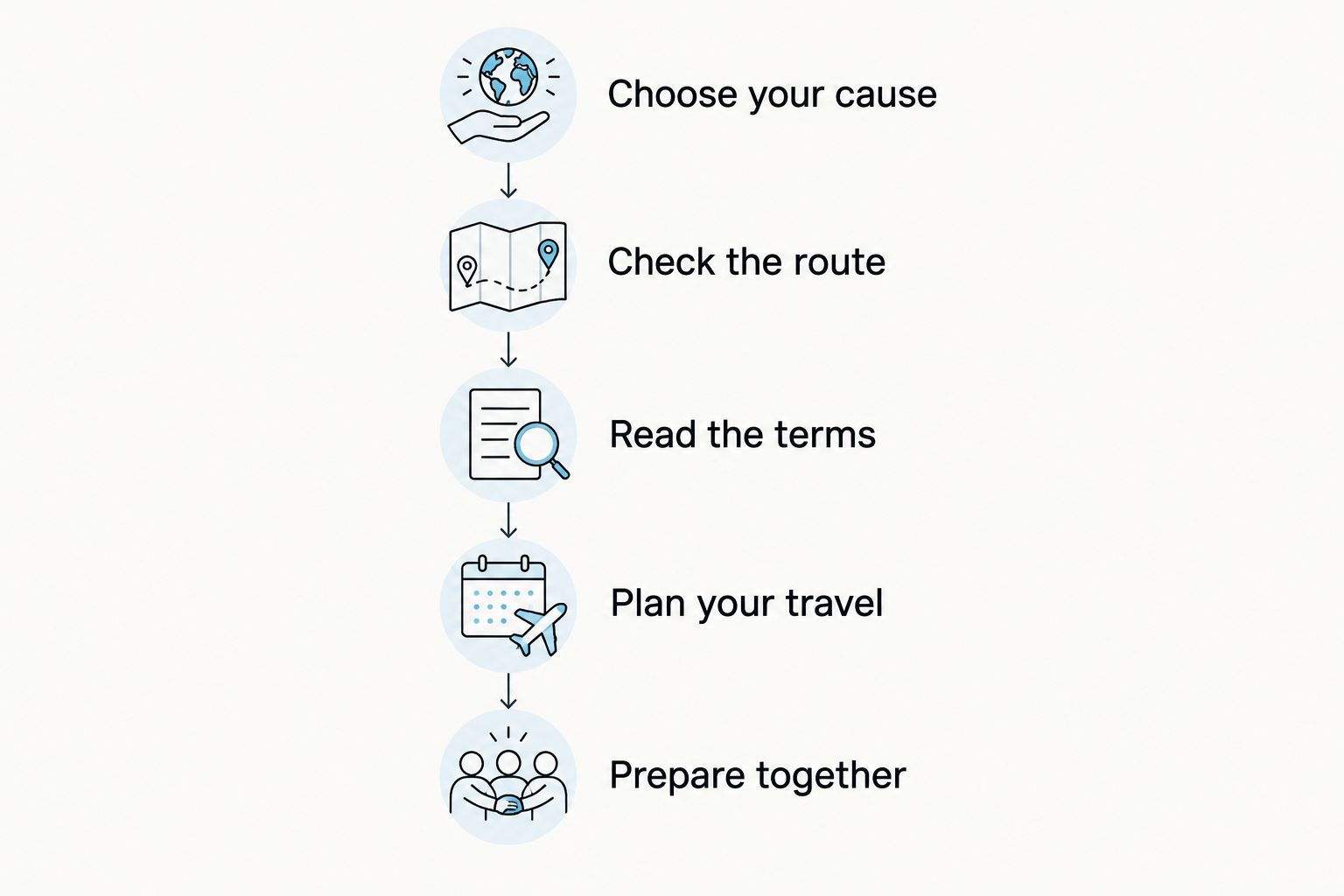
Use this sequence before registration. It keeps the mission visible without ignoring the practical demands of a long day on the bike.
- Choose your cause: Write down why the beneficiary matters to you. Keep your explanation specific and respectful.
- Check the route: Read the route map, climbing information, surface details, and completion expectations.
- Read the terms: Understand fundraising obligations, deadlines, cancellation provisions, and participant responsibilities.
- Plan your travel: Resolve how you and your bicycle reach the start and return from the finish.
- Prepare together: Set training expectations, discuss group-riding behavior, and agree on how teammates will stay connected.
A route map is useful, but it is not a complete participation plan. Read the organizer’s support information and know what you are expected to carry, maintain, and manage yourself. Share those expectations with your team before ride day.
WHICH CHARITY BIKE RIDE SHOULD YOU CHOOSE?
Choose Pan-Mass Challenge as the default if you want a multiday endurance challenge supporting cancer work. Choose Bike MS if multiple sclerosis drives your campaign, Pelotonia if your priority is a team cancer research effort, Tour de Cure for a single-day diabetes-focused goal, or Ride for Roswell for a Buffalo-area mixed-distance group.
If mental health awareness is your reason to ride, keep that mission explicit. Therideforhope connects community riding, merchandise, and volunteer efforts with mental health awareness. Do not describe another event as funding that cause unless its organizer identifies that beneficiary.
KEEP YOUR CAUSE IN MOTION
Explore community cycling and mental health awareness with Therideforhope.
FAQ
What are the best long distance charity bike rides for 2026?
Pan-Mass Challenge is the default pick for a multiday cancer-fundraising challenge. Bike MS, Pelotonia, Tour de Cure, and Ride for Roswell suit different causes and participation styles; confirm each organizer’s current event details before registering.
What counts as a long-distance charity bike ride?
Long-distance charity cycling has no single universal mileage threshold. A century is 100 miles, but terrain, consecutive riding days, and your experience determine how demanding a route is for you.
Is Pan-Mass Challenge better than Bike MS?
Pan-Mass Challenge is the better fit for a multiday cancer-focused goal, while Bike MS fits an MS-focused campaign. Choose the beneficiary first, then compare the specific routes and participation terms.
Can beginners join a charity bike ride?
Beginners should choose a route that matches their preparation rather than automatically selecting the longest option. Read the organizer’s route requirements, completion expectations, and support information before committing.
Do charity bike rides require fundraising?
Fundraising obligations depend on the event and participation option. Read the current organizer terms, including deadlines and any responsibility for an unmet commitment, before registering.
Can a team choose different charity ride distances?
A team can choose different distances when the event offers suitable route options and permits those selections. Coordinate start locations, finish arrangements, and communications instead of assuming everyone must ride together.
Which option fits cyclists supporting mental health awareness?
Therideforhope fits cyclists who want mental health awareness at the center of community riding and volunteering. For a long-distance event, confirm the organizer’s stated beneficiary rather than assuming every charity ride supports mental health.
ONE LAST THING
Your longest route is not automatically your strongest contribution. Choose a distance that leaves you able to participate responsibly, explain the cause clearly, and support your teammates. Before registering, write a plain-language sentence naming the beneficiary and why you care; use that sentence to anchor your fundraising campaign.