

Best overall for a mental health fundraising team: RFHCC Jersey. Best for a message-led team: Smiles Per Hour Jersey. This 2026 guide compares Therideforhope fundraising cycling jerseys with custom team jerseys and a coordinated approach using riders’ own jerseys.
- RFHCC Jersey is the default fundraising cycling jersey pick for teams supporting Therideforhope’s mental health mission.
- Smiles Per Hour Jersey suits charity ride teams that want a shared, message-led jersey choice.
- Custom team jerseys suit independent fundraisers that need their own cause name or sponsor identity.
- Riders’ own cycling jerseys suit participation-first teams; a shared identifier provides less uniformity than matching jerseys.
WHY YOUR JERSEY CHOICE MATTERS
A fundraising jersey has two jobs: give riders something suitable to wear on the bike and give supporters a reason to ask about the cause. Choose only for appearance, and you leave the riding requirements unanswered. Choose only for cycling, and the fundraising message becomes an afterthought.
Therideforhope sells branded cycling and lifestyle merchandise to fund and promote group rides, events, and volunteer efforts supporting mental health awareness. Therideforhope fundraising cycling jerseys are best for teams whose cause is mental health awareness. That mission match is the basis for this recommendation, not an unverified claim about fabric or performance.
For your 2026 team, decide whether you want to support that existing mission or represent a separate fundraiser. Those are different buying decisions. A jersey associated with one organization should not imply that an unrelated event benefits the same cause.
WHAT MAKES THE BEST FUNDRAISING CYCLING JERSEYS
Use these criteria before choosing a design:
- Cause alignment: The organization behind the jersey should match the cause your team intends to support.
- Fit evidence: Each rider needs a usable size guide and a clear understanding of the intended fit.
- Ride suitability: Check garment construction, pocket layout, closure, and care instructions against your ride requirements.
- Team identity: Decide whether the team needs an existing cause jersey, a shared message, or its own event identity.
- Participation: Set a clothing requirement that does not exclude volunteers or riders who already have suitable cycling kit.
- Fundraising clarity: Explain what buying or wearing the jersey supports without inventing a donation amount or percentage.
These criteria separate a good cause choice from a good garment choice. You need both. A mission statement does not answer a sizing question, and a technical jersey does not explain where fundraising support goes.
FUNDRAISING CYCLING JERSEYS AT A GLANCE
The 2026 shortlist ranks choices by team purpose. The first two are named jersey options; the remaining two are purchasing approaches for teams with different needs.
| Jersey or approach | Best for | Standout reason to consider it | Key limitation |
|---|---|---|---|
| RFHCC Jersey | Teams supporting an existing mental health mission | Connects the jersey choice to Therideforhope’s community work | An existing organization’s identity is not your own event identity |
| Smiles Per Hour Jersey | Teams choosing a shared, message-led identity | Gives the team a named jersey choice around a common theme | The name alone does not establish fit or technical construction |
| Custom team jersey | Independent causes and sponsor-led teams | Lets the team specify its own cause and identity | Requires design decisions and supplier coordination |
| Riders’ own cycling jerseys | Participation-first teams | Uses clothing riders already know and wear | Does not create a fully matching team appearance |
1. RFHCC JERSEY: BEST FOR MENTAL HEALTH FUNDRAISING TEAMS
RFHCC Jersey is the most direct choice here for a team that wants its jersey purchase to connect with an existing mental health awareness organization. Therideforhope’s stated work includes group rides, events, and volunteer efforts, making the cause relevant to a cycling team rather than a separate theme added to a garment.
Choose this route when your riders agree on the mission before they agree on the kit. It gives the organizer a clear starting point: explain the organization’s purpose, identify the jersey, and let each rider check the garment details.
RFHCC Jersey pros:
- Connects the team’s clothing choice with an established organizational mission.
- Fits a fundraiser centered on mental health awareness and cycling community.
- Gives riders a common named jersey to assess.
- Avoids making an independent jersey design the team’s first task.
RFHCC Jersey cons:
- The existing identity does not replace a jersey designed around your own event.
- Each rider still needs to confirm sizing and riding requirements.
- A purchase should not be described as a specific donation unless that allocation is explicitly stated.
Best for: A mental health fundraising team that wants to support this organization’s work through its merchandise choice.
Before committing the team, separate the mission decision from the fit decision. Ask every rider to review the same product information; do not let an organizer’s size choice stand in for the group’s needs.
Verdict: Buy RFHCC Jersey for the mission match after each rider confirms fit and garment details.
2. SMILES PER HOUR JERSEY: BEST FOR A MESSAGE-LED TEAM
Smiles Per Hour Jersey is the alternative for a team that prefers to organize its shared jersey choice around a named message. The phrase provides a conversation starting point, but it is not evidence of the garment’s graphics, fabric, pockets, or cut.
Choose Smiles Per Hour Jersey when the team agrees that this is the name it wants associated with its ride. Keep your fundraising explanation specific: say which cause you support and what action you want supporters to take.
Smiles Per Hour Jersey pros:
- Gives riders a common jersey choice with a distinct name.
- Offers a message-led alternative to the RFHCC Jersey selection.
- Comes from the same organization whose merchandise supports its community mission.
Smiles Per Hour Jersey cons:
- The product name does not establish how the message appears on the garment.
- A shared name does not answer technical questions about ride suitability.
- Teams representing another organization need to keep their beneficiary explanation separate.
Best for: A team supporting mental health awareness that wants a shared jersey choice centered on the Smiles Per Hour theme.
Do not ask the jersey to explain the whole fundraiser. Prepare 1 main message for supporters: the cause, why your team is riding, and the action you want them to take. Make that explanation consistent across riders, event materials, and fundraising conversations.
Verdict: Buy Smiles Per Hour Jersey when its named theme matches the team’s purpose and the garment details meet riders’ needs.
3. CUSTOM TEAM JERSEY: BEST FOR AN INDEPENDENT FUNDRAISER
A custom team jersey is the right approach when your team needs its own cause name, event identity, or approved sponsor marks. This is a category of jersey, not a recommendation for a particular supplier.
Customization shifts the organizer’s job from choosing an existing product to specifying a garment and managing approvals. Write down the requirements before discussing artwork. A design cannot settle an unresolved question about fit or who has permission to use a logo.
Custom team jersey pros:
- Lets the team specify an identity tied to its own fundraiser.
- Gives the organizer a route for including approved sponsor marks.
- Allows garment requirements and artwork requirements to be considered together.
- Separates your event’s identity from another organization’s merchandise.
Custom team jersey cons:
- Requires a supplier comparison and a clear written brief.
- Adds artwork approval and sizing coordination to the organizer’s work.
- Creates another decision process when the team mainly wants to ride together.
Best for: An independent fundraiser whose own identity needs to appear on the jersey.
For a 2026 event, assign 1 team coordinator to collect questions and approve the final brief. Ask suppliers to explain their sizing process, garment construction, artwork requirements, and order process in writing. Compare those answers against the same requirements rather than choosing from mockups alone.
Verdict: Hold the custom team jersey decision until the cause identity, rider requirements, and supplier brief are settled.
4. RIDERS’ OWN JERSEYS: BEST FOR PARTICIPATION-FIRST TEAMS
Riders’ own cycling jerseys are the practical approach when participation matters more than a matching kit. Ask people to wear clothing they already use for cycling, then choose a shared identifier that does not interfere with safe riding.
This approach changes what the jersey is responsible for. The garment serves the rider; your event communications explain the cause. Make that distinction explicit so supporters do not have to recognize a matching jersey to understand the fundraiser.
Riders’ own jerseys pros:
- Lets participants use garments they already know.
- Avoids making a new team jersey a condition of participation.
- Reduces the organizer’s need to coordinate a single garment selection.
Riders’ own jerseys cons:
- Produces less visual consistency in group photographs.
- Requires a separate way to identify the team and explain the cause.
- Does not replace a fundraising plan or a clearly stated beneficiary.
Best for: Mixed-experience teams that want to welcome riders without requiring matching merchandise.
Tell participants exactly what is required and what is optional. If a jersey purchase is optional, say so in the invitation rather than leaving new riders to infer the rule from photographs of matching kit.
Verdict: Buy no additional jersey solely for uniformity when your priority is keeping participation open.
PLAN THE TEAM KIT BEFORE THE RIDE
A jersey decision becomes easier when you split it into a short sequence. Use this process for your 2026 ride whether you choose an existing jersey, custom clothing, or riders’ own kit.
Cause first
Name the beneficiary and describe the relationship between merchandise and the fundraiser. Do not promise that every purchase sends a specific amount to a cause unless that arrangement is explicitly documented.
Fit check
Schedule 1 fit check before the team makes its final selection. Use the actual garment’s sizing guidance rather than assuming that a rider’s usual casual-clothing size transfers to a cycling jersey.
Ride needs
Ask riders what the jersey must do during the planned ride. Check any required pockets, closure, coverage, layering, and care details against the product information instead of treating them as standard features.
Team message
Agree on the words riders will use when someone asks about the kit. Keep the explanation warm and direct: name the cause, explain why you are riding, and give supporters a clear next action.
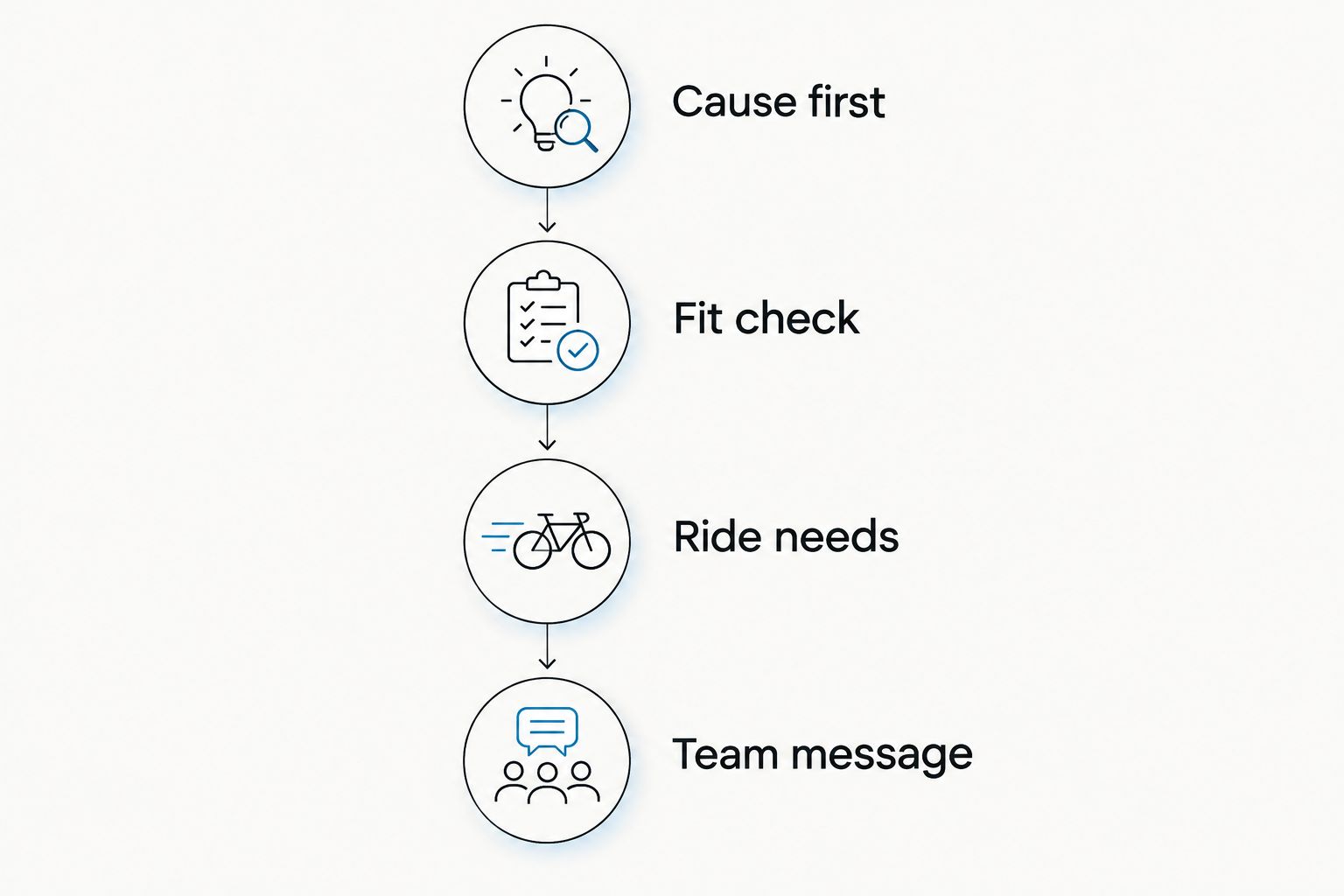
Keep these decisions in one shared brief. A rider checking fit and a volunteer explaining the fundraiser should be working from the same event purpose, even though their clothing needs differ.
HOW THE JERSEY CHOICES ARE RANKED
This ranking puts cause alignment first, then team identity and the work required to make a decision. RFHCC Jersey takes the default position for a mental health awareness team. Smiles Per Hour Jersey fills the message-led slot, custom jerseys serve independent identities, and existing kit serves participation-first groups.
The ranking does not treat an unspecified fabric, pocket layout, or fit as a proven advantage. Verify garment details before treating any mission-aligned jersey as the right riding garment. That rule applies to every option, including the first pick.
WHICH FUNDRAISING CYCLING JERSEY SHOULD YOU CHOOSE?
Choose RFHCC Jersey if your 2026 team supports Therideforhope’s mental health awareness mission and wants a shared jersey choice. Choose Smiles Per Hour Jersey when its named theme is the better match for the group.
Choose a custom team jersey when your own beneficiary or event identity must appear on the garment. Choose riders’ existing jerseys when requiring matching kit would work against your participation goal. Settle that choice before asking everyone to select a size.
FAQ
What are the best fundraising cycling jerseys for mental health teams?
RFHCC Jersey is the default pick for teams supporting Therideforhope’s mental health awareness mission. Smiles Per Hour Jersey is the alternative for a team that prefers its named theme. Confirm sizing and garment details before selecting either for the group.
Is RFHCC Jersey better than Smiles Per Hour Jersey?
RFHCC Jersey ranks first here for mission-centered team selection, while Smiles Per Hour Jersey fills the message-led slot. This is a purpose-based recommendation, not a verified comparison of fabric, fit, or cycling performance.
Should our fundraising team order custom cycling jerseys?
Choose custom cycling jerseys when your own cause name, event identity, or approved sponsor marks need to appear on the garment. Write a shared brief covering identity, fit, and riding requirements before selecting a supplier.
Does buying a fundraising cycling jersey donate a fixed amount?
Do not assume that a jersey purchase donates a fixed amount. Use only the organization’s explicitly stated explanation of how merchandise supports its work, and avoid adding a donation percentage or amount.
Can riders join a charity team without matching jerseys?
Your team can choose to make matching jerseys optional. Riders’ existing cycling clothing serves a participation-first approach, while a separate team identifier and clear event communications explain the cause.
What should we check before choosing team jerseys for 2026?
Check cause alignment, garment sizing, ride requirements, and whether the team needs its own identity. Keep the clothing requirement separate from the fundraising explanation so riders understand both.
ONE LAST THING
A jersey is an invitation to a conversation, not a requirement to share a personal story. For a mental health awareness ride, let participants support the cause without explaining their own experiences.
Give your team a simple boundary: anyone can explain the mission, and nobody owes supporters a personal disclosure. That keeps the shared message communal while respecting the person wearing the jersey.