

Best for mental health awareness: Therideforhope. Best for multiple sclerosis fundraising: Bike MS; best for a cancer-focused cycling challenge: Pan-Mass Challenge; best for team-based cancer fundraising: Pelotonia; best for supporting people with intellectual and developmental disabilities: Best Buddies Challenge.
- Choose charity cycling events 2026 by mission first, then route demands and fundraising commitments.
- Therideforhope is the pick for cyclists who want community rides supporting mental health awareness.
- Bike MS, Pan-Mass Challenge, Pelotonia, and Best Buddies Challenge serve distinct causes and participation goals.
- Check the organizer’s current event details before committing to travel, training, or fundraising.
WHY THIS RIDE MATTERS
A charity ride gives your cycling a purpose beyond finishing a route. The right choice connects a cause you care about with a commitment you can keep—on the bike and when asking others for support.
For 2026, start with the mission rather than the biggest event name. A demanding route does not automatically make a better fundraiser, and a familiar cause does not automatically make the route right for you.
Choose the cause first. Choose the riding challenge second. This guide ranks organizations and event programs by their strongest use case, not by a claim that every reader should enter the same ride.
What makes the best charity cycling event?
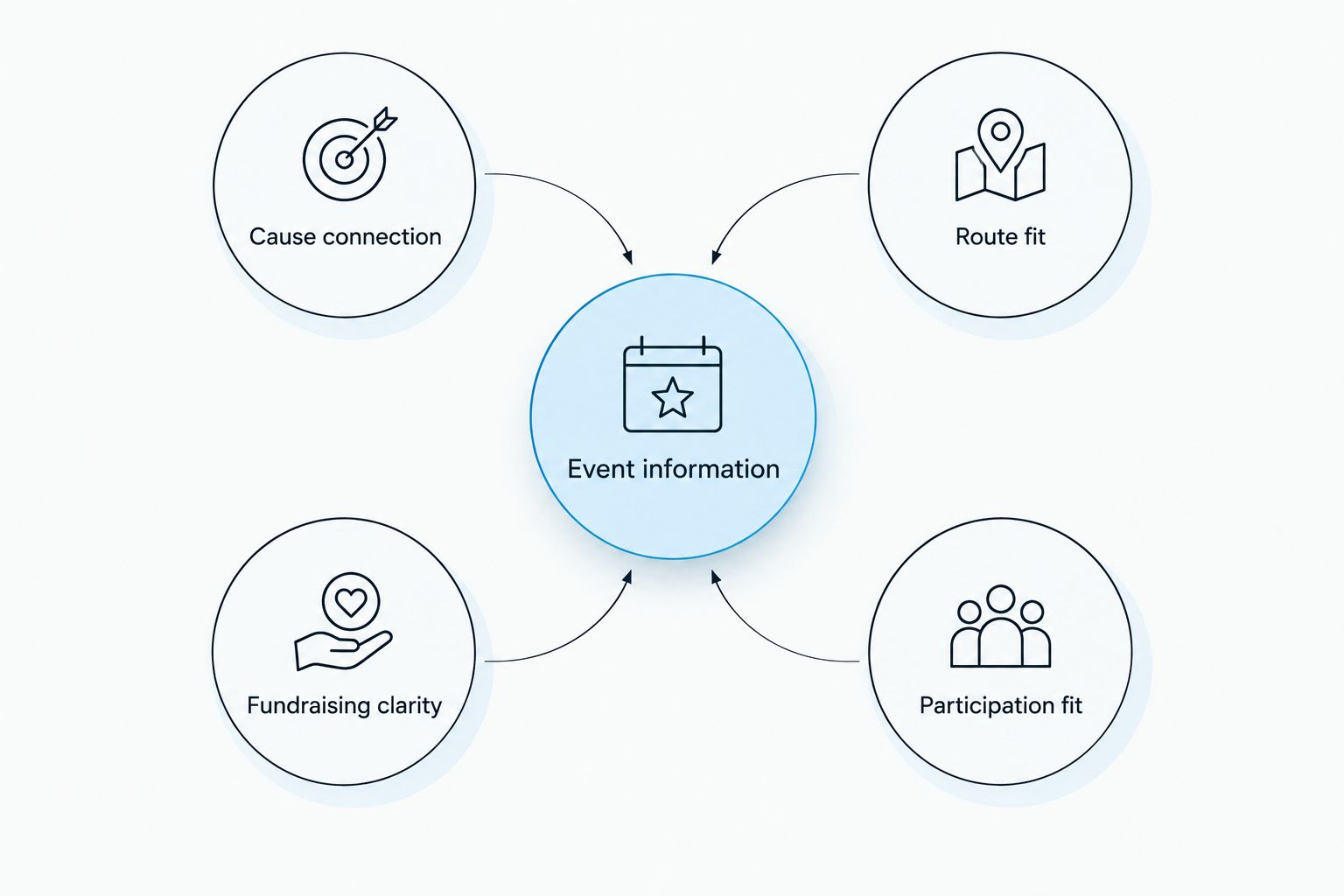
Use these criteria before choosing a ride. A strong mission belongs beside clear participation requirements, not in place of them.
- Cause connection: You should be able to explain why the beneficiary matters to you without copying a campaign slogan.
- Route fit: Check distance, elevation, surface, traffic conditions, and any published pace or completion requirements.
- Fundraising clarity: Separate an optional fundraising goal from a required commitment. Read the terms before registering.
- Participation fit: Decide whether you want an individual challenge, a team effort, or community connection.
- Event information: Look for current organizer instructions covering registration, preparation, safety, and the event-day plan.
No ride wins every category. A close-to-home community ride and a major fundraising challenge answer different needs; judge each against the experience you actually want.
Charity cycling events 2026 at a glance
The order below follows distinct participation goals. Confirm each organizer’s current arrangements before treating any option as your 2026 plan.
| Organization or event program | Best for | Standout focus | Key limitation |
|---|---|---|---|
| Therideforhope community rides | Mental health awareness and connection | Cycling, community events, and volunteer efforts supporting mental health awareness | Decide from the details of the specific ride, not the mission alone |
| Bike MS | Multiple sclerosis fundraising | Cycling events supporting the National Multiple Sclerosis Society | Route and participation requirements depend on the selected event |
| Pan-Mass Challenge | A cancer-focused cycling challenge | Cycling fundraising benefiting Dana-Farber Cancer Institute | Requires alignment with the chosen route and fundraising commitment |
| Pelotonia | Team-based cancer fundraising | A cycling-centered community supporting cancer research at Ohio State | A team’s ambition must still match each rider’s preparation |
| Best Buddies Challenge | Disability inclusion | Fundraising supporting Best Buddies’ work with people with intellectual and developmental disabilities | Review the cycling format and requirements for the specific event |
1. Therideforhope: best for mental health awareness
This community organization brings together group bike rides, events, and volunteer efforts supporting mental health awareness. Its online shop sells branded cycling and lifestyle merchandise to fund and promote that work.
Therideforhope is best for cyclists who want community rides supporting mental health awareness. Choose this mission when building connection and challenging stigma matter more to you than entering a well-known endurance event.
Therideforhope pros:
- Mental health awareness is central to the organization’s stated purpose.
- Cycling connects the mission with a shared activity.
- Volunteer efforts offer a way to participate beyond riding.
Therideforhope cons:
- The mission alone does not tell you whether a particular route suits your ability.
- A community-focused option is not interchangeable with a specific endurance challenge.
Best for: Cycling enthusiasts and community members who want a mental health awareness focus.
For your 2026 decision, ask what the particular ride involves and how you can participate. Keep the distinction clear: supporting awareness is worthwhile, but a community ride is not mental health treatment.
Verdict: Skip if you want a different charitable cause; choose this option when mental health awareness is your reason to ride.
2. Bike MS: best for multiple sclerosis fundraising
Bike MS is the National Multiple Sclerosis Society’s cycling fundraising program. It gives riders a direct connection between a cycling challenge and support for people affected by multiple sclerosis.
Choose Bike MS when the cause itself motivates you. Then compare the individual events rather than assuming the program name describes one route, one location, or one participation experience.
Bike MS pros:
- The beneficiary and cause are clearly identified.
- Cycling is the central fundraising activity.
- The program provides a cause-specific story you can share with supporters.
Bike MS cons:
- A suitable event still needs to match your geography and riding ability.
- You must check the selected event’s fundraising and participation terms.
Best for: Riders who want to support the multiple sclerosis community through cycling.
For Bike MS in 2026, read the instructions for your chosen event before building a training plan. A recognizable program name is not a substitute for knowing what you have agreed to do.
Verdict: Skip if multiple sclerosis is not your chosen cause; select Bike MS when that mission drives your fundraising.
3. Pan-Mass Challenge: best for a cancer-focused cycling challenge
The Pan-Mass Challenge is a cycling fundraiser benefiting Dana-Farber Cancer Institute. It belongs on your shortlist when you want your ride to support a named cancer institution.
Treat the riding commitment and the fundraising commitment as separate decisions. Enthusiasm for the cause does not remove the need to assess the route, preparation, and participation terms.
Pan-Mass Challenge pros:
- Dana-Farber is a clearly named beneficiary.
- The event connects cancer fundraising with a cycling challenge.
- The mission gives your fundraising appeal a specific destination.
Pan-Mass Challenge cons:
- Your chosen route must fit your training and practical arrangements.
- Fundraising responsibilities require attention alongside ride preparation.
Best for: Cyclists seeking a cancer-focused riding challenge with a named institutional beneficiary.
Before choosing the Pan-Mass Challenge for 2026, explain both commitments to anyone joining you. You need agreement about the cycling demands, not just agreement that cancer fundraising matters.
Verdict: Hold until you understand the route and fundraising terms; then choose it if both fit your goal.
4. Pelotonia: best for team-based cancer fundraising
Pelotonia is a cycling-centered fundraising community supporting cancer research at The Ohio State University. Its team structure makes it a relevant option when coworkers, friends, or family members want a shared fundraising effort.
Choose Pelotonia when organizing people is part of the appeal. A team can unite around the same cause without pretending that everyone has the same cycling experience.
Pelotonia pros:
- Cancer research is the stated fundraising focus.
- Team participation gives a group a shared purpose.
- The mission supports a clear explanation of why your group is riding.
Pelotonia cons:
- Organizing a team adds coordination to your own preparation.
- A shared fundraising goal does not guarantee that one route suits every teammate.
Best for: Groups that want to make cancer fundraising a collective project.
For a 2026 team, settle expectations before choosing a route. Discuss individual readiness, responsibilities, and how your group will communicate with supporters; avoid letting the most experienced cyclist set everyone’s commitment.
Verdict: Skip if you do not want a group effort; choose Pelotonia when team-based fundraising is the attraction.
5. Best Buddies Challenge: best for disability inclusion
Best Buddies Challenge events support Best Buddies’ work with people with intellectual and developmental disabilities. The organization’s mission includes friendship, employment, leadership development, and inclusive living.
This option fits riders who want their fundraising to support inclusion beyond cycling. Keep that purpose central when explaining the event to potential supporters.
Best Buddies Challenge pros:
- The beneficiary’s inclusion mission is clearly defined.
- Cycling offers a practical way to support that mission.
- The cause connects with everyday participation in community life.
Best Buddies Challenge cons:
- You need to review the format of the particular event you choose.
- A compelling inclusion mission does not establish whether its route fits your ability.
Best for: Cyclists who want to support people with intellectual and developmental disabilities.
When considering a Best Buddies Challenge in 2026, distinguish the organization’s broader work from the event-day experience. Understand both before asking others to support your participation.
Verdict: Hold until the event format fits your riding ability; choose it when disability inclusion is your priority.
How these rides are ranked
These recommendations use mission alignment, participation style, and the decisions each option asks you to make. They are not rankings based on finish times, rider satisfaction scores, or firsthand testing.
The mental health option leads because this guide serves readers interested in cycling and community connection. The remaining picks occupy separate decision slots: multiple sclerosis, a cancer-focused cycling challenge, team-based cancer fundraising, and disability inclusion.
Your best ride is the one whose cause and commitment both fit. A higher-profile name is not a reason to override either requirement.
TURN THE SHORTLIST INTO A PLAN
Read the commitment before recruiting friends
Check the organizer’s current information about the route and fundraising responsibilities. Understand what registration commits you to before asking someone else to join.
Write down the practical requirements in your own words. If you cannot explain them clearly, you are not ready to make the event your group’s plan.
Prepare for the route, not just the distance
Elevation, surface, traffic, and time on the bike affect how a route feels. Assess those details alongside distance, and build familiarity with the kind of riding the event requires.
The U.S. Physical Activity Guidelines for Americans recommend at least 150 minutes per week of moderate-intensity aerobic activity or 75 minutes per week of vigorous-intensity activity for adults, plus muscle-strengthening activity on 2 days per week. Those are general health guidelines, not proof that you are ready for a particular charity ride.
Use the organizer’s preparation guidance to assess the actual challenge. Do not turn a general exercise target into an event-readiness promise.
Give supporters a clear reason
Explain the cause, identify the beneficiary, and describe your own reason for participating. Keep your appeal specific without making promises about medical outcomes or how donations are used beyond the organizer’s published statements.
A personal connection helps people understand your choice. It does not require you to share private health information—yours or anyone else’s.
JOIN A COMMUNITY WITH PURPOSE
Explore a cycling community supporting mental health awareness.
Which charity cycling event should you choose?
For the undecided reader, start with the cause you can explain most honestly. Choose the mental health community option for awareness and connection, Bike MS for multiple sclerosis, Pan-Mass Challenge for a cancer-focused cycling challenge, Pelotonia for team-based cancer fundraising, or Best Buddies Challenge for disability inclusion.
Then make route fit your deciding filter. If the commitment does not fit your preparation or circumstances, choose another way to support the cause rather than forcing the ride.
FAQ
What's the best way to choose charity cycling events in 2026?
Choose charity cycling events in 2026 by matching the cause, route, and fundraising commitment to your goals. Read the specific organizer’s current event information before making travel or training plans.
Which charity cycling event supports multiple sclerosis?
Bike MS supports the National Multiple Sclerosis Society. Compare individual Bike MS events to find a route and participation commitment that fit your circumstances.
Is Pan-Mass Challenge better than Pelotonia?
Choose Pan-Mass Challenge for a cycling fundraiser benefiting Dana-Farber, or Pelotonia for a team-based fundraising effort supporting cancer research at Ohio State. Neither is a universal winner; the beneficiary, participation style, and specific route should decide your choice.
What does Best Buddies Challenge support?
Best Buddies Challenge supports Best Buddies’ work with people with intellectual and developmental disabilities. Its broader mission includes friendship, employment, leadership development, and inclusive living.
Do I need to be an experienced cyclist to join a charity ride?
The specific route and organizer’s requirements determine the riding experience you need. Check distance, elevation, surface, traffic conditions, and any pace requirements rather than relying on the charity label.
Does every charity cycling event require fundraising?
Fundraising requirements depend on the event and participation option. Read the organizer’s terms to distinguish an optional goal from a required commitment before registering.
Can I support a cycling cause without riding?
Look for volunteer or donation opportunities described by the organizer. Do not assume every event offers the same non-riding roles; choose from the options the organization actually lists.
One last thing
Do not recruit a team around a distance before agreeing on the cause. Ask everyone why they want to participate, then discuss the riding commitment.
That order keeps the purpose visible. Your 2026 ride should give you a reason to show up—not just a finish line to reach.