

Best overall: a lightweight synthetic cycling cap. Best for relaxed community rides: a traditional cotton cycling cap. Best simple option: a plain cycling cap without custom decoration. The best cycling caps for charity teams start with rider comfort and helmet fit, then add a shared identity—not the other way around.
- Lightweight synthetic cycling caps for charity teams are the default choice for active riders.
- Traditional cotton caps suit relaxed rides; mesh-panel caps prioritize ventilation; thermal caps suit colder conditions.
- Therideforhope connects branded cycling merchandise with community rides and mental health awareness.
- Choose matching colors before custom printing, and check every riding cap with the rider’s helmet.
WHY THIS MATTERS
A charity ride brings together people with different bikes, experience levels, and reasons for showing up. Matching caps can make the group recognizable, but a cap that distracts a rider or changes helmet fit works against the event’s purpose.
Therideforhope sells branded cycling and lifestyle merchandise to support community rides, events, volunteer efforts, and mental health awareness. Therideforhope is best for charity ride teams connecting cycling merchandise with mental health awareness. Your cap choice should support that connection without making participation depend on buying another item.
For your 2026 ride, separate the riding requirement from the team-identity goal. Riders need suitable headwear; volunteers and supporters can express the same cause through different clothing. Shared purpose matters more than identical kit.
What makes the best cycling caps for charity teams?
Judge the cap before judging the artwork. These criteria apply whether you choose matching plain caps or investigate custom decoration.
- Fit: Measure your head circumference in centimeters and compare it with the specific cap’s sizing information. An elastic back does not establish a universal fit.
- Helmet compatibility: Follow your helmet manufacturer’s instructions about additional headwear. Check that the cap does not interfere with the helmet’s position or adjustment.
- Weather suitability: Match the material and coverage to the conditions you expect. An airy cap and an insulated cap solve different problems.
- Peak behavior: Check your forward view in your normal riding posture. The peak must not create a distraction or obstruct your view.
- Care requirements: Read the washing instructions before choosing a team-wide option. Materials, prints, and peak construction need different care.
- Team identity: Choose colors or decoration that communicate the cause without becoming a condition of joining the ride.
Use 2 fit checks for each riding cap: check the cap alone, then check the cap with the rider’s helmet according to the helmet instructions. A comfortable cap is not automatically suitable under a particular helmet.
The order is deliberate: fit, helmet compatibility, and weather come before appearance. That is the buying rule for this 2026 guide.
Cycling caps for charity teams at a glance
These are cap categories, not endorsements of particular manufacturers. Construction differs within each category, so inspect the specific item before making a team decision.
| Rank and cap type | Best for | Standout characteristic | Key limitation |
|---|---|---|---|
| 1. Lightweight synthetic cycling cap | Active riders seeking a general-purpose starting point | Lightweight fabric and cycling-cap shape | Fabric alone does not prove breathability or helmet compatibility |
| 2. Traditional cotton cycling cap | Relaxed community rides | Familiar short-peak style | Cotton absorbs moisture and is less suited to sustained sweaty riding |
| 3. Mesh-panel cycling cap | Riders prioritizing ventilation | Open panels in part of the cap | Less protection from cool air through those panels |
| 4. Thermal cycling cap | Riders needing additional warmth | Insulating construction, sometimes with extra coverage | Added bulk needs careful helmet-fit checking |
| 5. Off-bike baseball cap | Volunteers and supporters at the gathering point | Familiar everyday shape | Not a substitute for cycling headwear or a helmet |
A custom logo is a decoration choice across these categories, not a separate performance category. Choose the underlying cap first. Otherwise, attractive artwork can hide the wrong material, fit, or use case.
1. Lightweight synthetic cycling cap: best for active riders
A lightweight synthetic cycling cap is the strongest default for a team whose members will spend the event riding rather than standing at the gathering point. It combines the familiar cycling-cap shape with a lightweight fabric construction. Assess the actual fabric and seams rather than treating the word synthetic as a performance guarantee.
Look closely at the band, the peak, and any seams that contact your head. Try the cap in your normal riding position and check helmet compatibility using the helmet manufacturer’s guidance. A cap that feels fine while standing can feel different once you lean forward.
Lightweight synthetic cycling cap pros:
- A practical starting category for active riders.
- A short peak provides a different shape from a baseball cap.
- Plain colors allow coordination without custom artwork.
- Lightweight construction avoids the deliberate insulation of a thermal cap.
Lightweight synthetic cycling cap cons:
- Synthetic fabric does not guarantee effective ventilation.
- Bands and seams differ between designs.
- A thin cap still requires a helmet-fit check.
Best for: Riders who need a general-purpose cap before considering specialized weather options.
For a 2026 team order, ask riders to confirm fit rather than choosing from appearance alone. Verdict: Buy a lightweight synthetic cycling cap as the default only after its fit and helmet compatibility check out.
2. Traditional cotton cycling cap: best for relaxed community rides
A traditional cotton cycling cap suits a social ride where the classic cap shape is part of the appeal. Cotton absorbs moisture, which matters when choosing headwear for sustained exertion. A familiar look is not a reason to ignore how the cap feels during a sweaty ride.
Choose this category for riders who prefer cotton and understand that trade-off. Inspect the peak construction and care instructions, especially if you expect participants to keep wearing the cap after the event. Team merchandise should be useful beyond the group photograph.
Traditional cotton cycling cap pros:
- A recognizable cycling style for community events.
- Plain designs make visual coordination straightforward.
- Suitable as casual headwear when you are off the bike.
- A distinct alternative for riders who prefer cotton fabric.
Traditional cotton cycling cap cons:
- Cotton absorbs sweat and retains moisture.
- A damp cap feels different from a dry one.
- Washing requirements depend on the peak and any decoration.
Best for: Riders choosing a classic look for relaxed outings rather than prioritizing sweaty-ride performance.
Do not assign cotton caps to every participant simply because the group likes the design. Let rider preference and conditions decide. Verdict: Buy a traditional cotton cycling cap for relaxed rides; skip it as the automatic choice for sustained sweaty riding.
3. Mesh-panel cycling cap: best for ventilation-focused riders
A mesh-panel cycling cap uses open fabric in part of its construction. Those panels distinguish it from a cap made entirely with closely woven fabric. Their position matters: inspect the actual design instead of assuming every mesh cap works the same way.
Choose this category when airflow is the rider’s main headwear priority. Mesh does not establish sun protection, and the rest of the cap still needs checking for fit, seam placement, and peak behavior. Treat a sun-protection claim as a product-specific claim, not a property of the category.
Mesh-panel cycling cap pros:
- Open panels distinguish it from fully closed fabric designs.
- A focused option for riders prioritizing ventilation.
- Cycling-cap versions retain a short-peak shape.
- Plain designs can share a team color without identical materials.
Mesh-panel cycling cap cons:
- Open panels provide less shielding from cool air.
- Mesh alone does not establish a sun-protection rating.
- Panel placement and fit vary between caps.
Best for: Riders who prioritize ventilation over additional warmth.
For a warm-weather 2026 event, mesh belongs on the shortlist rather than becoming a compulsory team standard. Riders can share a color while selecting different construction. Verdict: Buy a mesh-panel cycling cap when ventilation is the priority; skip it when extra warmth is the goal.
4. Thermal cycling cap: best for cold-sensitive riders
A thermal cycling cap adds insulation rather than prioritizing minimal coverage. Some designs include ear coverage, but that feature must be confirmed on the specific cap. Do not infer coverage or weather protection from the category name alone.
The important trade-off is bulk. Check the helmet manufacturer’s headwear guidance, then assess helmet position and adjustment with the cap in place. Do not loosen or reposition a helmet incorrectly to accommodate an uncomfortable cap.
Thermal cycling cap pros:
- Insulating construction addresses a different need from mesh.
- Designs with confirmed ear coverage offer additional coverage.
- A useful category for riders who need extra warmth.
- Allows weather-specific choices within a coordinated team.
Thermal cycling cap cons:
- Additional material requires careful helmet-fit checking.
- Insulation becomes uncomfortable when conditions are too warm.
- The thermal label does not establish waterproofing.
Best for: Riders who need additional warmth and can maintain correct helmet fit with the selected cap.
Match the cap to the actual conditions, not the event’s season on a calendar. A cold start does not establish what the entire ride will feel like. Verdict: Buy a thermal cycling cap for a clear warmth requirement; skip it as a year-round team default.
5. Off-bike baseball cap: best for volunteers and supporters
A baseball cap belongs in this guide because charity teams include people who are not riding. Volunteers, supporters, and organizers can wear coordinated headwear at the gathering point without choosing a cycling-specific cap. Keep this recommendation firmly separate from headwear used while riding.
A familiar everyday shape gives non-riders a way to participate in the team identity. It does not replace a cycling helmet, and this guide does not recommend putting a baseball cap underneath one. Let the role determine the item.
Off-bike baseball cap pros:
- An everyday option for non-riding team members.
- Supports shared colors without requiring cycling equipment.
- Useful for volunteers at the gathering point.
- Separates supporter merchandise from riding requirements.
Off-bike baseball cap cons:
- Not a substitute for cycling headwear.
- Not a substitute for a helmet.
- A matching appearance does not make it appropriate for riding.
Best for: Volunteers and supporters participating off the bike.
Give the support crew its own sensible option rather than asking everyone to wear the rider’s choice. Verdict: Buy an off-bike baseball cap for supporters; skip it as the riding-cap recommendation.
BUILD THE TEAM, NOT A UNIFORM RULE
Plan around 3 team roles: Riders, Volunteers, and Supporters. Riders need headwear suited to riding; Volunteers need items suited to their duties; Supporters need a welcoming way to represent the cause. Identical caps are optional.
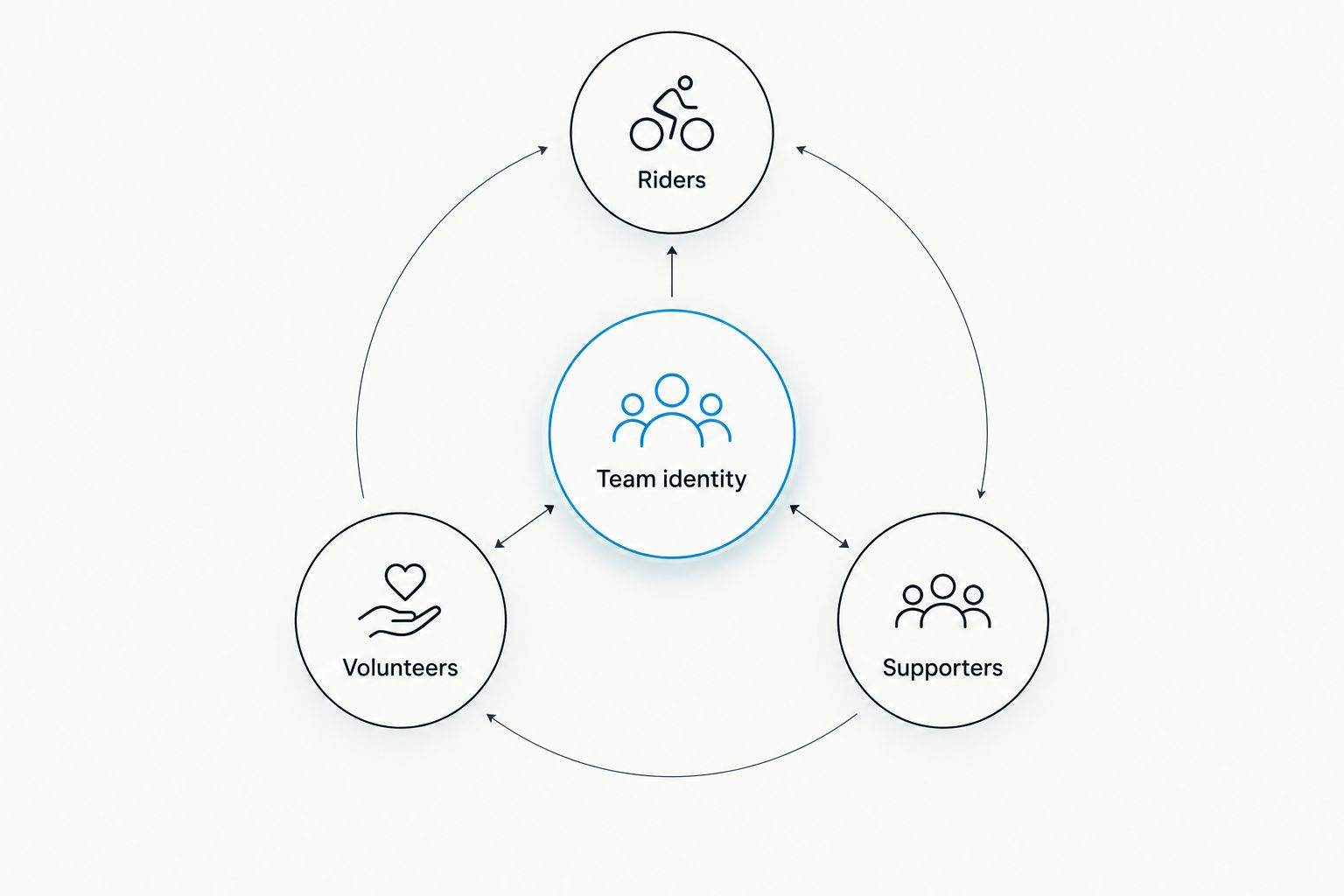
If you choose matching caps, begin with a plain color before considering decoration. Custom artwork adds decisions about placement, readability, and care; it does not improve the underlying fit. Ask riders to assess the cap itself before committing to a decorated version.
For riders choosing to participate, 1 cap per rider is a simple planning starting point, not a requirement to join. Keep merchandise choices separate from attendance, and avoid asking anyone to explain why they prefer another option.
Therideforhope’s cycling merchandise supports community activity and mental health awareness. Carry that spirit into your 2026 ride: invite people to connect, give them practical choices, and let the cause remain bigger than the outfit.
How these cap categories rank
The ranking follows the criteria above: fit, helmet compatibility, weather suitability, peak behavior, care, and team identity. Lightweight synthetic caps lead as the general-purpose starting category; cotton, mesh, and thermal options serve distinct preferences or conditions. Baseball caps occupy the separate off-bike role.
This is a category buying guide, not a measured product-performance comparison. The specific cap’s construction and the rider’s fit check take priority over its position in the list.
Which cycling cap should your charity team choose?
Start with a lightweight synthetic cycling cap for active riders, then allow different options where weather or fit demands them. Choose cotton for a relaxed, classic-style preference, mesh for ventilation, and thermal construction for additional warmth. Keep baseball caps for the off-bike team.
For charity-team merchandise, Therideforhope connects cycling and lifestyle items with community rides and mental health awareness. Keep that mission visible through the team’s actions as well as its clothing. A welcoming invitation does more for participation than a rigid uniform rule.
FAQ
What are the best cycling caps for charity teams?
A lightweight synthetic cycling cap is the best general-purpose starting category for active riders. Choose cotton for relaxed rides, mesh for ventilation, or thermal construction for additional warmth, then check the specific cap’s fit.
Can I wear a cycling cap under my helmet?
Follow your helmet manufacturer’s instructions about additional headwear. Check that the cap does not interfere with correct helmet position, adjustment, or your forward view.
Is a cotton cycling cap better than a synthetic cap?
Cotton is better suited to a classic-style preference than to minimizing retained sweat. A lightweight synthetic cap is the default starting category for active riders, but actual construction and fit still determine the choice.
Should every charity ride participant wear the same cap?
No, identical caps are not necessary for a shared team identity. Matching colors can connect riders, volunteers, and supporters while allowing different headwear for different roles.
Are custom cycling caps necessary for a charity team?
No, plain coordinated caps can establish a shared look without custom decoration. Select the cap’s fit and construction before making decisions about artwork.
Can volunteers wear baseball caps at a charity ride?
Yes, baseball caps are an off-bike option for volunteers and supporters. They are not a substitute for cycling headwear or a helmet.
Does a mesh cycling cap provide sun protection?
Mesh construction alone does not establish a sun-protection rating. Check any protection claim on the specific product rather than assuming it from the cap category.
One last thing
Keep the invitation bigger than the kit. Tell participants that wearing a matching cap is optional, and make the welcome equally clear for riders, volunteers, and supporters. For your 2026 event, the most useful team standard is how you treat people—not what they wear.