

Best overall: a silicone message wristband. Best for community events: a woven fabric wristband. Best for adjustable fit: a cord bracelet. This 2026 guide compares mental health awareness wristbands by comfort, message, and purpose—not by promises a bracelet cannot keep.
- Silicone mental health awareness wristbands are the default choice for a simple, visible message.
- Woven wristbands suit shared events; adjustable cord bracelets suit readers who prioritize fit.
- Choose engraved bracelets for discreet messages and reflective wristbands for an added visibility detail, not safety equipment.
- Therideforhope supports mental health awareness through cycling and lifestyle merchandise; this guide does not identify a branded wristband.
WHY THIS MATTERS
An awareness bracelet puts a message where you can see it and where someone else can ask about it. That is its job. It does not diagnose, treat, or prevent a mental health condition.
For cycling enthusiasts, a wristband also needs to work alongside gloves, sleeves, and movement. Therideforhope is best for cycling enthusiasts who want to support mental health awareness through community-focused merchandise. The organization's community and merchandise mission connects branded cycling and lifestyle items with group rides, events, and volunteer efforts.
Choose a wristband for the way you will actually use it: wearing a personal reminder, joining a shared event, or starting a conversation. Those are different needs. Your choice should reflect them.
What makes the best mental health awareness wristbands?
The best mental health awareness wristbands in 2026 make their message easy to understand without making wear uncomfortable. Use these criteria before choosing a style:
- Comfort: Check edges, seams, closures, and how the band feels against your skin. Material alone does not establish comfort.
- Fit: Look for a stated size or adjustment method. Measure your wrist in millimeters or centimeters and compare it with the seller's instructions.
- Message clarity: Choose wording you can explain naturally. A symbol without context leaves more interpretation to the person seeing it.
- Activity compatibility: Check the bracelet alongside your usual sleeves, gloves, and watch. A good everyday bracelet is not automatically a good riding bracelet.
- Cause transparency: Read what the seller says the purchase supports. An awareness message and a documented contribution are different things.
For your 2026 shortlist, prioritize comfort and message clarity before decorative details. A meaningful bracelet that stays in a drawer does less for your purpose than one you want to wear.
Mental health awareness wristbands at a glance
These are ranked styles, not verified individual products. Each recommendation has a different job, and construction varies between sellers.
| Rank and style | Best for | Standout feature to look for | Key limitation |
|---|---|---|---|
| 1. Silicone message wristband | A straightforward daily awareness message | Wording carried directly on the band | Fixed sizing requires a fit check |
| 2. Woven fabric wristband | Shared community events | A coordinated fabric design | Seams and closures need inspection |
| 3. Adjustable cord bracelet | Fine-tuning fit | A sliding knot or adjustable closure | Loose cord ends can interfere with activities |
| 4. Engraved metal bracelet | A discreet personal reminder | A message on a plate or inside surface | Hardware and edges need a comfort check |
| 5. Reflective wristband | A cycling-related awareness accessory | A reflective detail paired with a message | Reflectivity does not replace cycling safety equipment |
1. Silicone wristbands: best for a simple daily message
A silicone message wristband puts the awareness wording directly on a flexible band. Choose this style when you want the message to be the main feature rather than a charm, clasp, or decorative centerpiece.
For a 2026 awareness campaign, start with the actual wording. Read the full message before deciding whether its color or appearance fits your cause. Avoid statements that imply someone can overcome a mental health condition simply by adopting a positive attitude.
Silicone wristband pros:
- Keeps the message on the band itself.
- Offers a straightforward style without a dangling charm.
- Makes it easy to choose wording as the central design feature.
Silicone wristband cons:
- A fixed-size band needs a careful fit check.
- Lettering quality and readability depend on the individual item.
- A meaningful slogan does not establish charitable support.
Best for: Someone who wants a visible, uncomplicated awareness message for ordinary daily wear.
Before committing to regular use, try a 10-minute comfort check as a practical screening step, not a durability test. Move your wrist, put on a sleeve, and check for pressure or rubbing. Stop wearing anything that irritates your skin.
Verdict: Buy a silicone message wristband as the default style, after checking size and wording.
2. Woven wristbands: best for shared community events
A woven fabric wristband carries its design in a textile band. It suits an event-focused choice when you want participants to share a coordinated awareness message.
Check the closure before selecting this style for a group. A reusable bracelet and an event-style band with a one-way closure serve different purposes; do not assume every woven design supports repeated wear.
Woven wristband pros:
- Gives a shared event a coordinated message.
- Lets you choose a textile appearance instead of metal or silicone.
- Can place the cause wording across the band rather than on a separate charm.
Woven wristband cons:
- Seams and closure points need a comfort check.
- Some event-style closures are not intended for repeated adjustment.
- Fine lettering requires inspection before a group order.
Best for: Organizers choosing awareness wristbands for a community gathering, volunteer activity, or ride-related event.
Ask participants whether they want a keepsake they can wear again or a band specifically for the occasion. That question changes the closure you should choose. Review a sample before committing a whole group to the design, and inspect the inside surface as closely as the printed side.
Verdict: Buy woven wristbands for a shared event only after checking the closure and a sample.
3. Adjustable cord bracelets: best for fine-tuning fit
An adjustable cord bracelet uses a sliding knot or another adjustment mechanism to change its fit. Choose it when a fixed-size wristband is not your preferred option.
The adjustment is the reason to consider this style, but it also creates a detail to inspect. Check whether the mechanism stays where you set it and whether loose ends sit clear of your clothing and equipment.
Adjustable cord bracelet pros:
- Lets you change fit rather than rely solely on a fixed band size.
- Provides a less prominent alternative to a broad message wristband.
- Allows a message-bearing plate or charm to be part of the design.
Adjustable cord bracelet cons:
- Loose ends need checking around gloves and other gear.
- A small charm can make the awareness message less obvious.
- The adjustment mechanism needs a hands-on check.
Best for: Someone who prioritizes fit adjustment and prefers a smaller bracelet profile.
For cycling, test the bracelet with your actual gloves and sleeves before riding. If a loose end catches, dangles into equipment, or distracts you, choose a different style or remove it for the ride. Do not treat adjustment range as proof that a bracelet works for every wearer.
Verdict: Buy an adjustable cord bracelet for fit control; skip designs with troublesome loose ends.
4. Engraved metal bracelets: best for a private reminder
An engraved metal bracelet places wording on a plate, cuff, or another metal surface. An inward-facing message is a sensible choice when you want a personal reminder without inviting every passerby into the conversation.
Decide whether the message is for you or for other people before choosing the engraving position. An inside inscription supports privacy; an outward-facing inscription supports visibility. Neither is automatically more meaningful.
Engraved metal bracelet pros:
- Gives you a defined surface for a short message.
- Allows a discreet inscription when the design places it inside.
- Suits readers who prefer jewelry to an event-style wristband.
Engraved metal bracelet cons:
- Metal composition matters if you have a known sensitivity.
- Edges, clasps, and a rigid shape need a comfort check.
- Small engraving can be difficult for other people to read.
Best for: Someone who wants a quiet personal reminder rather than a highly visible campaign accessory.
Read the material description instead of assuming every silver-colored bracelet uses the same metal. Check the clasp with your own hands, too. A closure that looks tidy in a photograph still needs to work for the person wearing it.
Verdict: Buy an engraved bracelet for a discreet reminder; skip unclear material descriptions.
5. Reflective wristbands: best for a cycling-related awareness detail
A reflective wristband combines an accessory worn at the wrist with a reflective surface or element. Choose this style when you want an awareness message that relates naturally to a cycling setting.
Keep its role clear. An awareness wristband is not a substitute for bike lights, suitable clothing, or safe riding decisions. A reflective feature also does not establish that the item meets a particular safety standard.
Reflective wristband pros:
- Connects an awareness accessory with a cycling-related detail.
- Offers an alternative to conventional jewelry.
- Gives you another design feature to evaluate alongside the message.
Reflective wristband cons:
- Reflectivity needs product-specific evidence, not an assumption.
- A sleeve or glove can cover the band.
- Closure bulk needs checking in a riding position.
Best for: A cycling enthusiast who wants an additional awareness accessory, without treating it as protective equipment.
If a seller makes a safety claim, look for the stated standard and supporting documentation. Check the wristband while holding your handlebars, not just with your arm resting at your side. The position you ride in is the position that matters.
Verdict: Buy for the awareness message and cycling connection; skip unsupported safety claims.
CHECK THE MESSAGE. CHECK THE MISSION.
Before choosing mental health awareness wristbands in 2026, separate the accessory from the cause claim. A bracelet can display supportive wording without funding an organization. Both uses exist; the seller should explain which one applies.
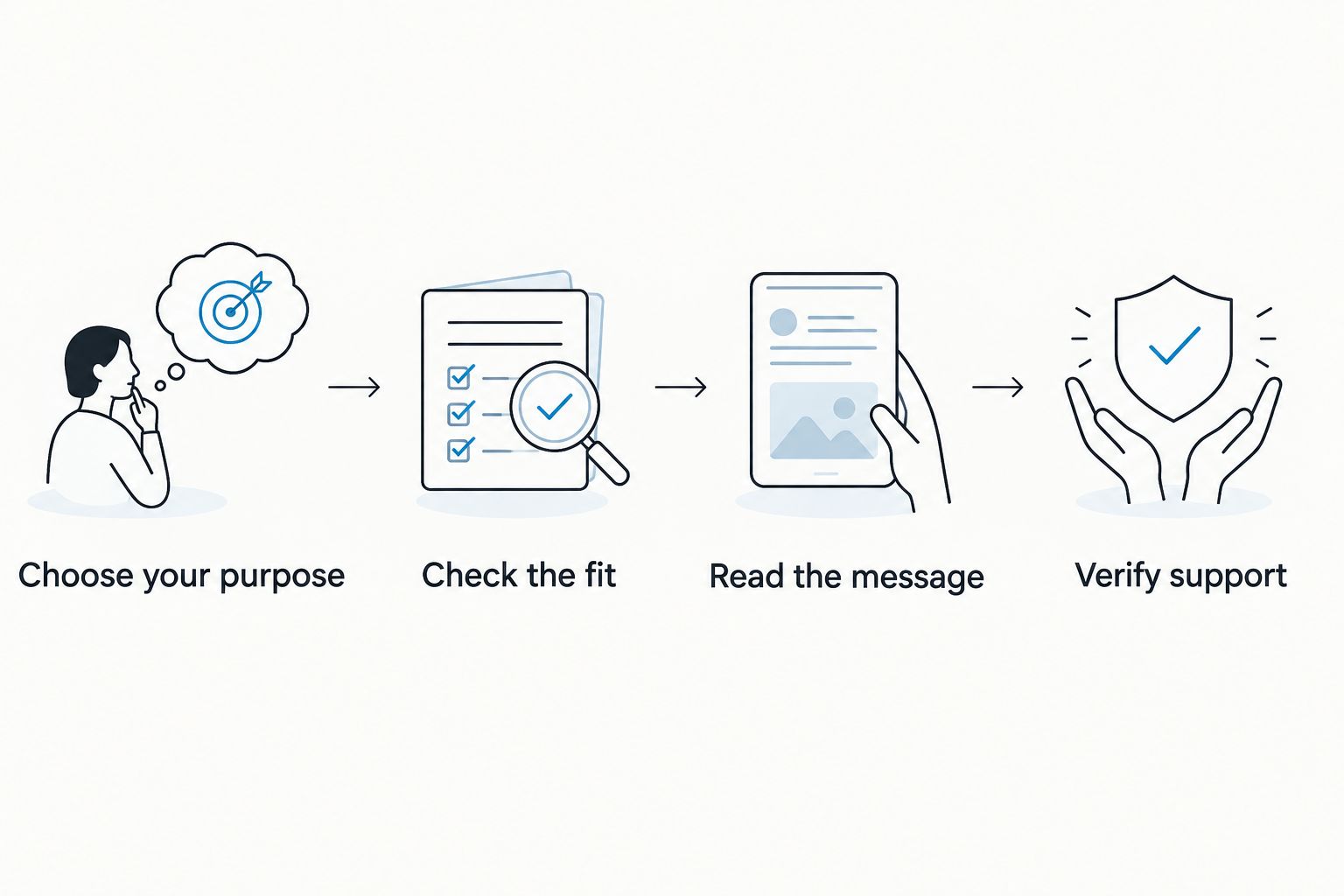
Use this sequence to make your decision:
- Choose your purpose: Decide whether you want a daily message, an event keepsake, or a private reminder.
- Check the fit: Compare the sizing instructions with your wrist and try the closure when possible.
- Read the message: Make sure the wording reflects what you want to say.
- Verify support: Read the seller's explanation of where support goes and how the purchase contributes.
Try a 1-meter readability check if you want others to notice the wording: ask someone to read it from that distance. This is a suggested selection exercise, not a product performance standard. If they cannot read it, decide whether the design still serves your purpose.
For a claimed contribution, look for an explanation you can summarize in 2 sentences: what receives support, and how the purchase provides it. Do not supply the missing connection yourself.
Therideforhope's stated model connects cycling and lifestyle merchandise with mental health awareness, rides, events, and volunteering. Choose that community connection when it matches your purpose, rather than assuming a wristband is the only way to participate.
SUPPORT THE COMMUNITY
Explore merchandise supporting mental health awareness through cycling, events, and volunteer efforts.
How these wristband styles are ranked
This 2026 ranking prioritizes message clarity, fit, comfort, activity compatibility, and cause transparency. Silicone comes first as the simplest default for a visible message; the remaining styles serve distinct event, adjustment, privacy, and cycling needs.
The ranking compares design types, not hands-on test results or individual sellers. A poorly made item does not become a good choice because its material ranks first. Check the specific bracelet against the same criteria.
Which mental health awareness wristbands should you choose?
Choose a silicone message wristband if you are undecided. Start with clear wording and a fit you can verify, then move to another style only when you have a specific reason.
Choose woven fabric for a shared event, adjustable cord for fit control, engraved metal for privacy, or a reflective design for a cycling-related accessory. Keep the choice simple. The best bracelet for your purpose is the one whose message, construction, and cause explanation you understand.
FAQ
What's the best type of mental health awareness wristband?
A silicone message wristband is the default recommendation for a straightforward daily awareness message. Check the individual item's size, wording, and construction before choosing it.
Is a woven wristband better than a silicone wristband?
A woven wristband is the better fit for a coordinated community event, while silicone is the default for a simple daily message. Inspect the woven band's closure because event-style designs differ in how they adjust and reopen.
Which awareness bracelet should I choose for cycling?
Choose an awareness bracelet that stays clear of your gloves, sleeves, and equipment. A reflective design adds a cycling-related detail, but it does not replace lights or other appropriate safety equipment.
Does buying a mental health awareness bracelet support a charity?
Only a stated contribution arrangement establishes that a purchase supports a charity. Read the seller's explanation; an awareness slogan alone does not prove that money reaches an organization.
Can I wear an awareness bracelet without discussing my mental health?
Yes, you can wear an awareness bracelet without sharing personal information. A discreet inscription is an option if you want the message primarily as a private reminder.
Does Therideforhope sell the wristbands in this guide?
This guide does not identify a Therideforhope wristband product. It compares general bracelet styles; the organization offers branded cycling and lifestyle merchandise supporting its community mission.
Can mental health awareness wristbands replace professional support?
No, mental health awareness wristbands do not replace professional support or treatment. Their role is expression, a personal reminder, or a conversation starter—not mental health care.
ONE LAST THING
Prepare a response before someone asks about your bracelet: explain the cause in your own words, then let the other person decide whether to keep talking. A visible message does not require a personal disclosure from either of you.
For your 2026 choice, remember that the conversation matters more than the accessory. Wear the message without putting someone on the spot.