

Best overall: a meal arranged with permission. Best for personal remembrance: a memory book. Best simple gesture: a handwritten note. The best gifts for suicide loss survivors offer care without asking the recipient to feel better, explain their grief, or join a cause.
- The best gifts for suicide loss survivors offer practical help, personal remembrance, or quiet companionship without obligations.
- Choose a meal with permission for everyday support; choose a handwritten note when preferences are unknown.
- Therideforhope mental health awareness merchandise fits recipients who already want to express support publicly.
- Ask before giving memorial gifts, awareness clothing, or invitations to community cycling events.
Why this matters
A gift after suicide loss is not a solution to grief. It is a way to say that someone matters and that your care does not depend on their response. Choose something that fits the person, not something that makes your own message louder.
Therideforhope sells cycling and lifestyle merchandise to support mental health awareness, community rides, events, and volunteer efforts. That mission belongs in this guide, but awareness merchandise is not the default bereavement gift. Private, practical support comes first unless the recipient has expressed another preference.
This 2026 guide ranks gift approaches by purpose rather than treating grief as a shopping category. The recipient's wishes outrank every recommendation below.
What makes the best gifts for suicide loss survivors
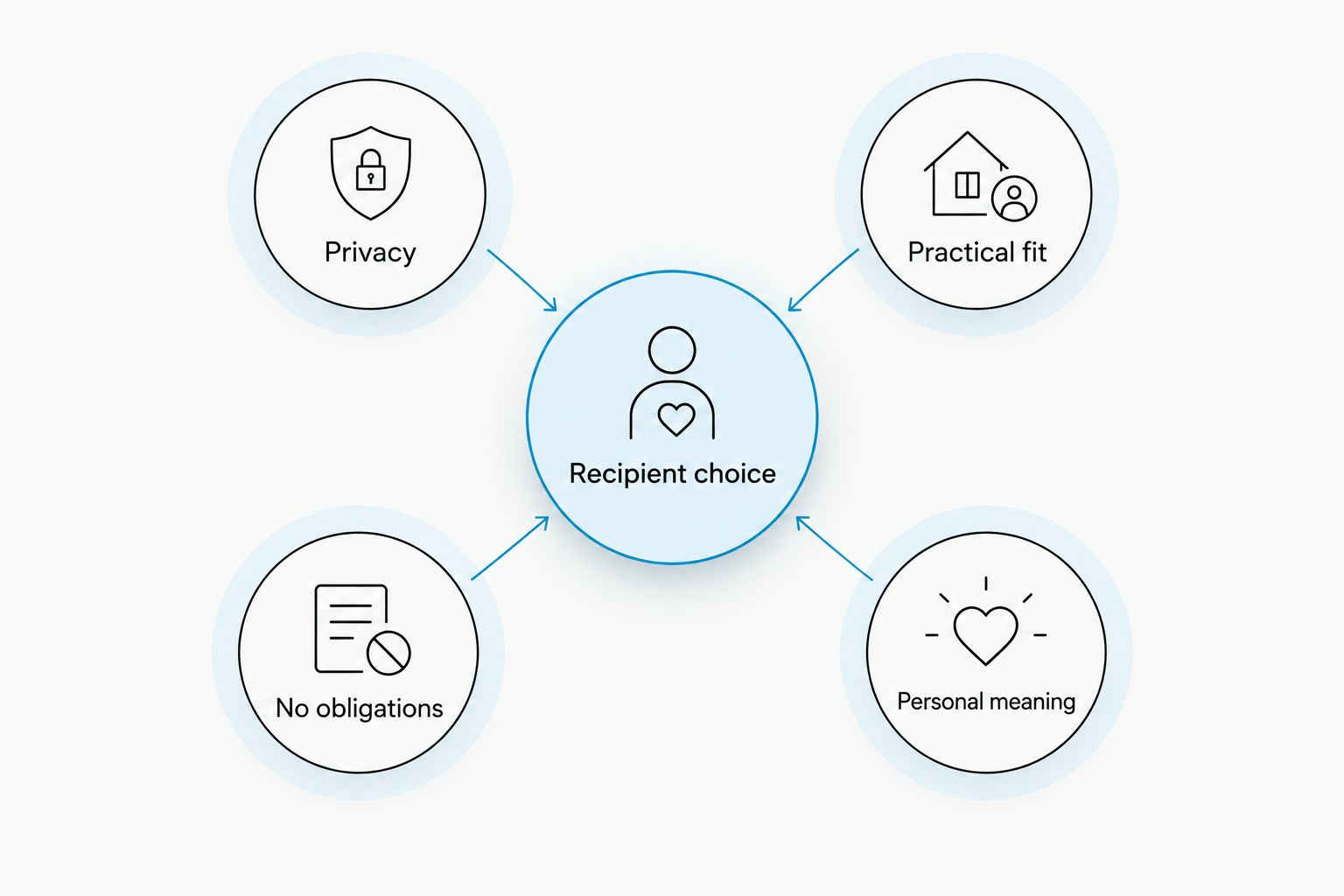
Use these criteria before choosing an item or arranging support:
- Recipient choice: Ask whether the person wants the gift, especially when it involves remembrance or public awareness.
- Privacy: Avoid clothing, inscriptions, or deliveries that disclose a loss without permission.
- Practical fit: Match food, tasks, clothing, and activities to preferences you actually know.
- No obligations: Do not attach a gathering, thank-you message, photograph, or conversation to the gift.
- Personal meaning: Choose a connection the recipient recognizes, not a slogan you assume will comfort them.
A useful test for your 2026 gift choice is whether the person can decline it without disappointing you. If accepting means explaining themselves or committing to an activity, simplify the offer.
Gifts at a glance for 2026
Each option serves a different purpose. The order favors low-pressure support first; it does not measure how much a gift means.
| Gift | Best for | Standout feature | Key limitation |
|---|---|---|---|
| Meal arranged with permission | Daily needs | Handles an ordinary task | Requires dietary and delivery preferences |
| Handwritten note | Quiet connection | Offers care without an event | Wording needs care |
| Memory book | Personal remembrance | Holds selected memories privately | Requires permission before collecting material |
| Household help | Practical relief | Removes an agreed task | Access and boundaries matter |
| You Matter Tee | Requested awareness clothing | A wearable mental health message | Public messaging is not everyone's preference |
| Optional cycling invitation | Shared activity | Offers company around an existing interest | Must fit the recipient's riding preferences |
| Plain notebook | Private expression | Leaves its purpose to the recipient | Can imply homework if presented badly |
1. Meal arranged with permission: best for daily needs
A meal gift handles food preparation without asking the recipient to host you. Offer something that matches their dietary needs and household preferences, then agree on delivery before arranging it.
Give 2 meal choices, not an open-ended request to design a menu. A clear offer is easier to accept or decline than a surprise delivery that needs refrigerator space, reheating instructions, or an immediate answer at the door.
Meal gift pros:
- Supports an ordinary daily need.
- Does not require discussing the loss.
- Can be left at an agreed location without a visit.
Meal gift cons:
- Unknown allergies or preferences make a surprise meal a poor choice.
- Unscheduled delivery creates another decision for the recipient.
Best for: Someone who welcomes practical help with food.
Avoid attaching a social visit to the delivery unless it is wanted. Food should remain the gift; spending time with you should remain a separate choice.
Verdict: Buy or prepare a meal only after confirming the person's preferences.
2. Handwritten note: best for quiet connection
A handwritten note offers recognition without requiring the recipient to display anything or attend an event. Keep it plain: acknowledge the loss, express care, and make clear that no reply is needed.
If you knew the person who died, include a genuine memory when that feels appropriate to your relationship. Do not invent a shared connection or turn the note into an explanation of the death.
Handwritten note pros:
- Can be read privately and put away.
- Does not require scheduling.
- Leaves room for a personal memory rather than a generic message.
Handwritten note cons:
- Religious language needs to match the recipient's beliefs.
- Advice or explanations can overshadow the expression of care.
Best for: Someone whose gift preferences you do not know.
Avoid instructions to stay strong, find closure, or turn pain into purpose. Your note does not need a lesson. A sincere acknowledgment is enough.
Verdict: Buy a simple card and write a personal note without advice.
3. Memory book: best for personal remembrance
A memory book gathers photographs, stories, or keepsakes the recipient wants to preserve. Its strength is personal meaning, not elaborate presentation.
Ask before collecting contributions from other people. A surprise collection can expose private relationships, introduce unwanted material, or put the recipient in charge of responding to everyone involved.
Memory book pros:
- Keeps selected memories together.
- Allows the recipient to decide when to revisit it.
- Can focus on the person's life rather than the circumstances of their death.
Memory book cons:
- Choosing photographs and stories requires permission and judgment.
- A finished book can include material the recipient would rather keep private.
Best for: Someone who has asked for help preserving memories.
Offer 2 formats: a physical book or a private digital collection. Let the recipient choose, and ask whether they want to review the material before you assemble it. Do not include details about the death unless explicitly requested.
Verdict: Hold until the recipient confirms that a memory book is welcome.
4. Household help: best for practical relief
Household help is a gift of an agreed task, not an offer to reorganize someone's life. Ask about 1 specific task, such as collecting groceries or taking bins out, instead of requesting a full list of needs.
Keep the scope clear. Permission to complete a chore is not permission to sort belongings, open private rooms, or make decisions about possessions.
Household help pros:
- Removes a task the recipient has identified.
- Can support someone without adding another object.
- Allows you to offer a concrete action rather than general reassurance.
Household help cons:
- Home access requires trust and explicit agreement.
- Unrequested cleaning can feel intrusive.
Best for: Someone who wants help with a defined household responsibility.
Agree on the task and timing before arriving. If the recipient declines, accept the answer without trying to prove that they need your help. Respect is part of the gift.
Verdict: Buy or arrange help only for a task the recipient has approved.
5. You Matter Tee: best for requested awareness clothing
The You Matter Tee is an awareness-clothing option from Therideforhope. The organization sells branded cycling and lifestyle merchandise to fund and promote rides, events, and volunteer efforts supporting mental health awareness.
Therideforhope mental health awareness merchandise is best for cycling enthusiasts who already want to express support publicly. That is a specific use case, not a reason to give awareness clothing to every person bereaved by suicide.
You Matter Tee pros:
- Offers clothing with a direct mental health message.
- Fits a recipient who has expressed interest in awareness merchandise.
- Connects the gift to an organization with a stated community mission.
You Matter Tee cons:
- The message is public rather than private.
- Clothing requires confirmation of size and personal taste.
Best for: Someone who has specifically welcomed awareness clothing.
For a 2026 gift, confirm that the wording itself feels right to the recipient. Do not assume that a positive message matches how they want to remember someone or speak about their loss.
Verdict: Buy only when the recipient wants this message and this type of clothing.
6. Optional cycling invitation: best for shared activity
A cycling invitation offers company around an interest the recipient already has. It is not a treatment, a challenge, or a request to become an advocate.
Offer 2 possible dates and make declining easy. Ask about route, pace, companions, and whether they want conversation or quiet company before making a plan.
Cycling invitation pros:
- Builds the offer around an existing interest.
- Can provide company without centering every conversation on grief.
- Leaves room for a private ride rather than a public event.
Cycling invitation cons:
- An organized gathering creates a social commitment.
- A route or pace chosen without agreement can make the invitation unsuitable.
Best for: A cyclist who has said they would like company.
Do not surprise someone with event registration, fundraising duties, or a memorial ride announced in their name. Participation and public acknowledgment require separate permission. Keep the invitation flexible enough to cancel without explanation.
Verdict: Hold until the recipient chooses the activity and level of participation.
7. Plain notebook: best for private expression
A plain notebook leaves its purpose open. The recipient can use it for memories, ordinary lists, sketches, or nothing at all.
Present it without instructions. A gift that arrives with grief exercises or a request to write every day creates an assignment rather than an expression of care.
Plain notebook pros:
- Does not require a public message.
- Lets the recipient choose its use.
- Can be put aside without affecting anyone else's plans.
Plain notebook cons:
- It is a poor fit for someone who dislikes writing.
- Therapeutic framing can imply that the recipient needs to work on their grief.
Best for: Someone who already enjoys writing, drawing, or keeping notes.
Choose an understated format unless you know their preferences. Avoid adding a memorial inscription or motivational cover message without checking first. Personalization is only personal when it fits the person receiving it.
Verdict: Buy for an existing notebook user; skip it as prescribed grief homework.
How these gifts are ranked
This ranking uses recipient choice, privacy, practical fit, freedom from obligations, and personal meaning. It ranks the suitability of gift approaches, not product quality or outcomes after bereavement.
Meals and notes lead because they can offer direct care without requiring public expression. Memory books, clothing, and activities need more information about the recipient's wishes. Move any option to the bottom of your list when it conflicts with a stated preference.
Which gift should you choose?
For an undecided giver, choose a handwritten note and ask whether a meal would be welcome. That combination offers acknowledgment and practical support without making a decision about remembrance on someone else's behalf.
If the recipient has asked for something specific, follow that request instead. A wanted notebook beats an unwanted memorial book. Requested awareness clothing beats a surprise item carrying a message they would not choose.
In 2026, keep your decision simple: private support by default, personal remembrance with permission, and public participation only by choice. Do not make the gift a test of whether someone is ready to reconnect.
FAQ
What's the best gift for someone who has lost a loved one to suicide?
A meal arranged with permission is a strong default for practical support, while a handwritten note works when preferences are unknown. Choose something the person can accept without hosting, replying, or discussing their grief.
Is a memorial gift appropriate after suicide loss?
A memorial gift is appropriate when the recipient wants it. Ask before collecting photographs, commissioning an inscription, or sharing memories with a wider group.
What should I write in a card for a suicide loss survivor?
Acknowledge the loss, express care, and make clear that no reply is required. Include a genuine memory if appropriate, but avoid explanations of the death or instructions about how to grieve.
Are mental health awareness shirts a good bereavement gift?
Mental health awareness shirts fit recipients who have expressed interest in wearing that message. Check the wording and size first; do not assume someone wants to make their grief or connection to a cause public.
Should I invite a suicide loss survivor to a charity ride?
Invite them only as an optional activity that matches their interests. Ask about the event and social setting before making commitments, and never register them or announce their participation without permission.
What gifts should I avoid after suicide loss?
Avoid gifts that explain the death, prescribe recovery, disclose private information, or require participation. Unrequested memorial inscriptions, surprise gatherings, and grief assignments put your intentions ahead of the recipient's wishes.
Is it too late to send a sympathy gift in 2026?
A sympathy gift does not need to coincide with the immediate aftermath of a death. Acknowledge the person without assuming that time has changed what they want, and ask before arranging anything that requires their participation.
One last thing
Separate the gift from the invitation. Delivering food does not buy a visit, sending a notebook does not invite you to read it, and giving clothing does not commit someone to a public cause.
Before sending anything, remove the expectation attached to it. The strongest gesture is one the recipient can receive, decline, or put away while still knowing that your care remains.